Five interactive chemistry labs from the Unit 1 storylines — Cold Snap and Meltdown at the Ice Rink. Each lab runs entirely in your browser: no install, no account, nothing stored. Click a preview or its launch button to open the lab in a new tab.
Lab 1 — Measuring a Sample
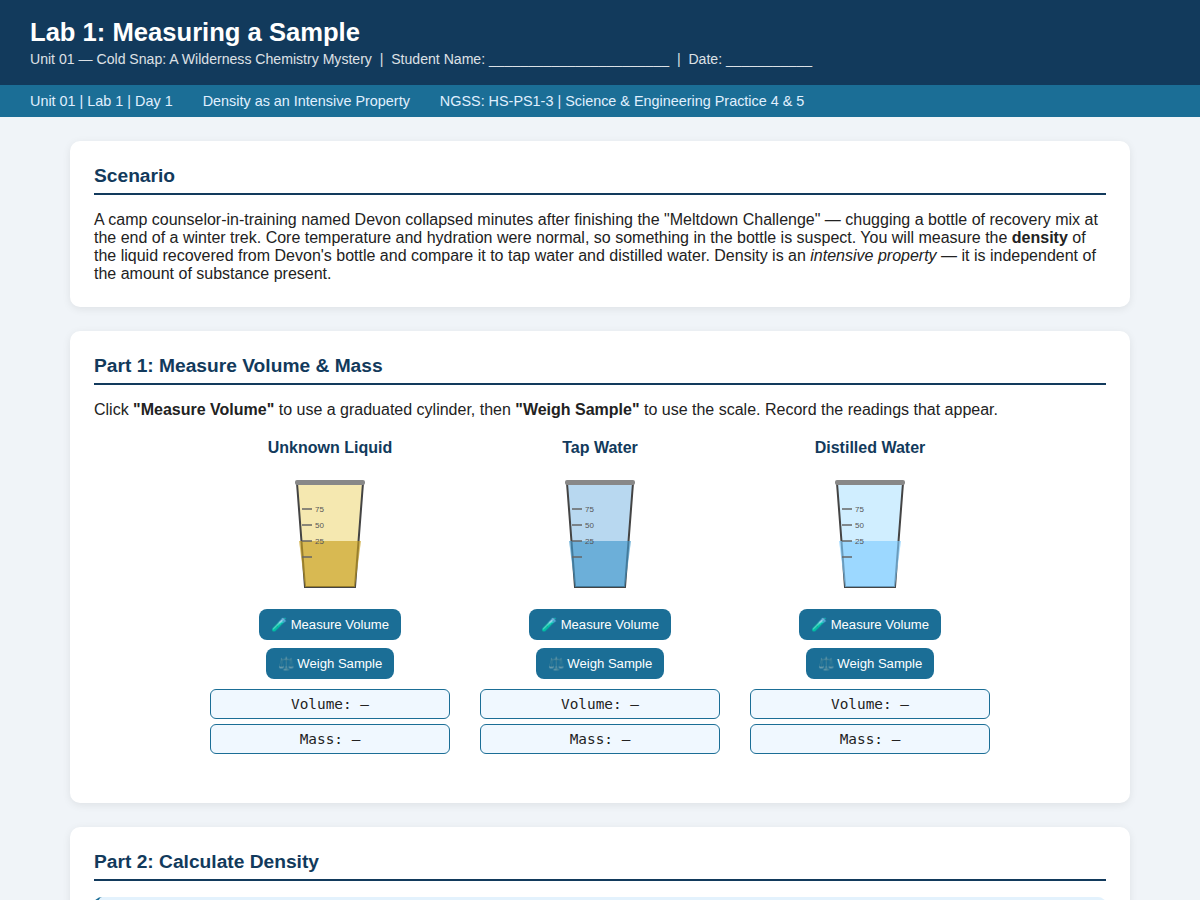
A camper collapses after chugging a bottle of recovery mix, and the liquid left in the bottle is the evidence. You measure volume and mass, compute density, and use it as an intensive property to decide what was actually in the bottle.
Lab 2 — Separating the Mixture
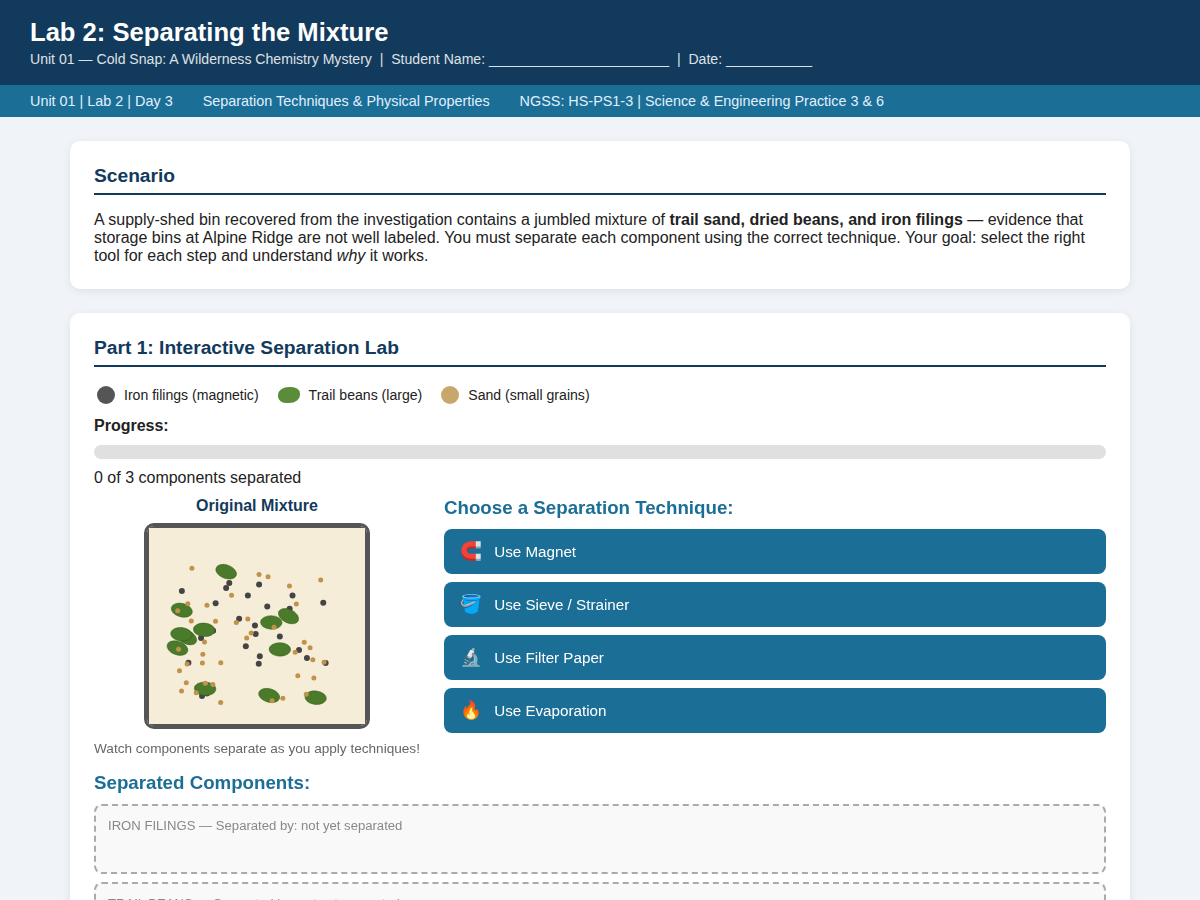
A recovered supply-shed bin holds a jumble of trail sand, dried beans and iron filings. You separate the mixture component by component — and the point is not just doing it, but choosing the right technique for each step and saying why it works.
Lab 3 — Testing the Unknown
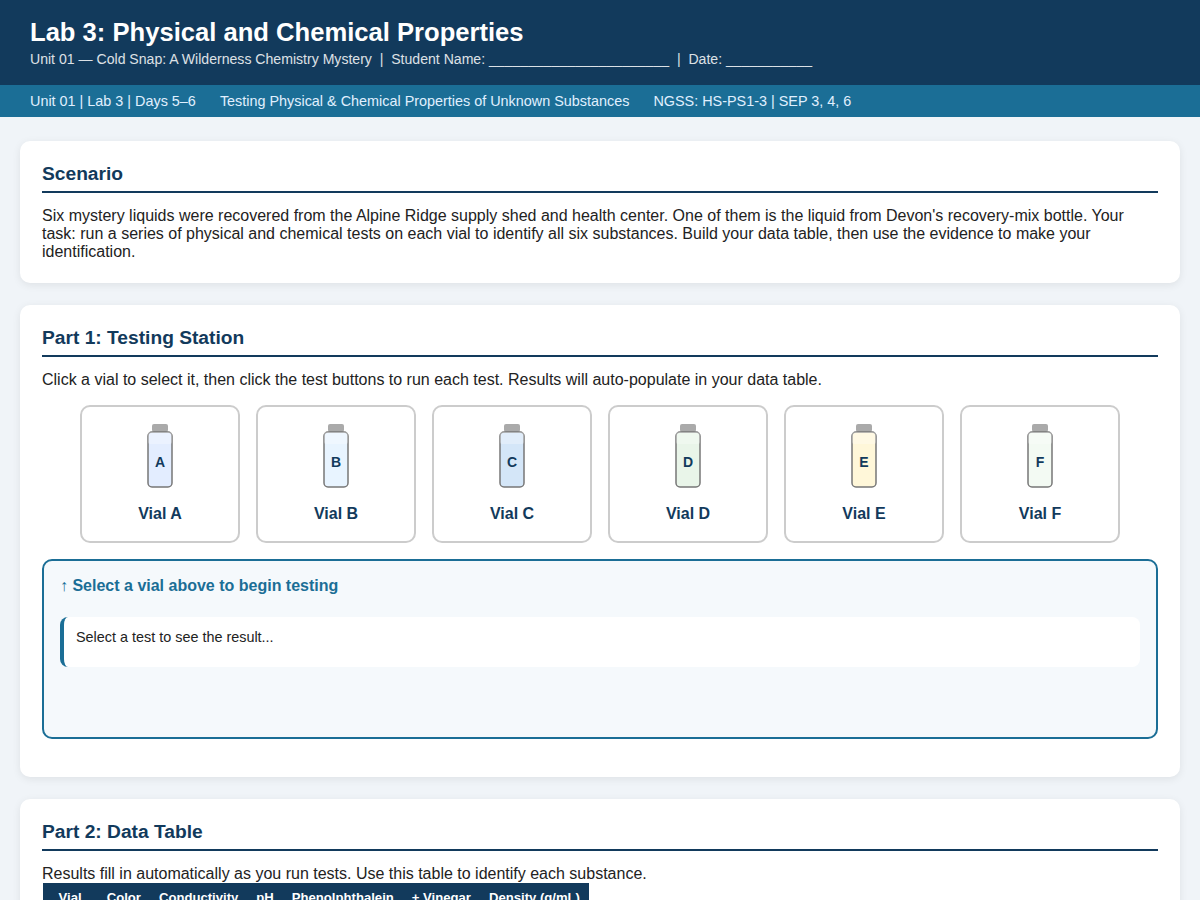
Six mystery liquids, one of them from the recovery-mix bottle. You run physical and chemical tests on each vial, build your own data table, and identify all six substances from the evidence.
Lab 15 — Warming Hut Calorimetry
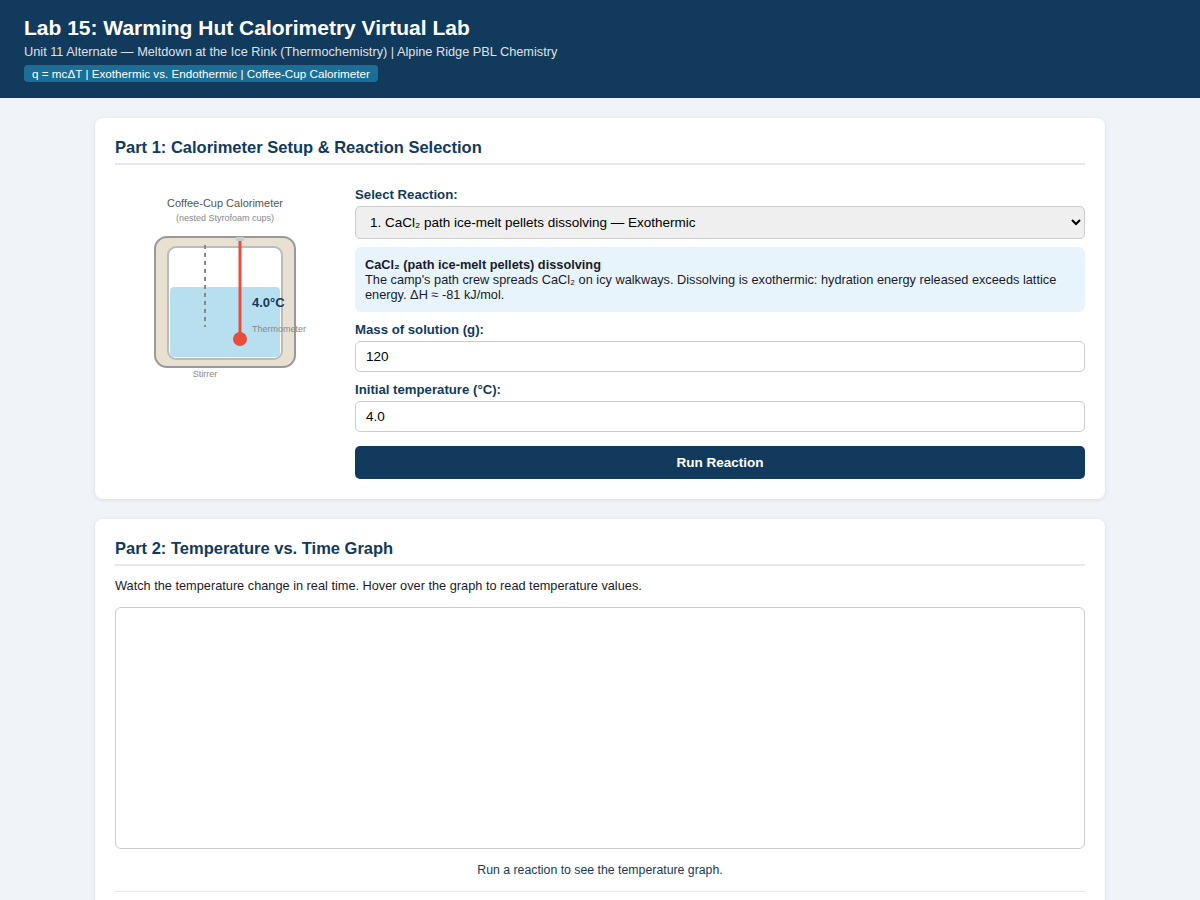
A coffee-cup calorimeter you actually run: pick a reaction, watch the temperature move, and work q = mcΔT to decide whether it is exothermic or endothermic — and by how much.
Lab 16 — Heating and Cooling Curves
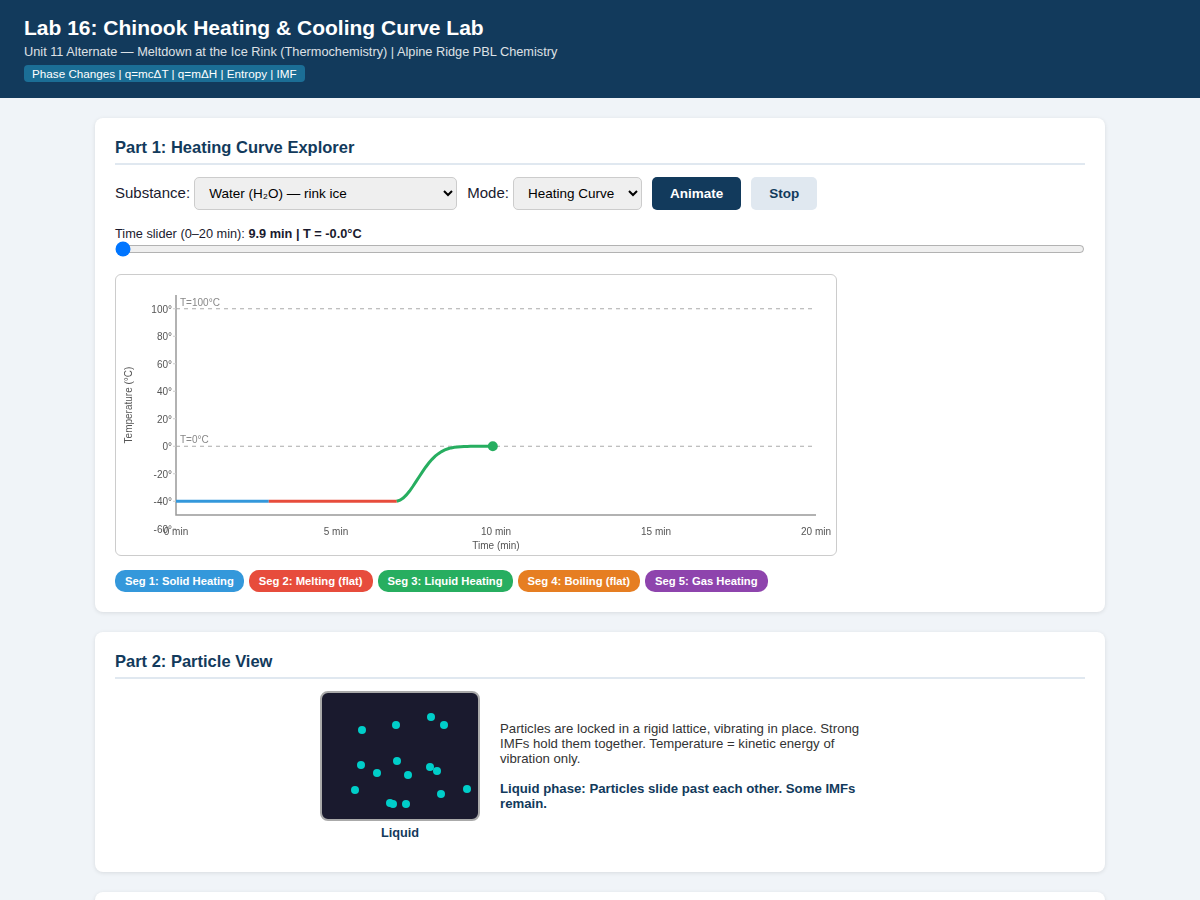
Build and read heating and cooling curves for water, ethanol and copper. The plateaus are the point: students connect phase changes to q = mΔH, the sloped segments to q = mcΔT, and see why the same heat does different things in different regions of the curve.
Before you start
Every lab opens in a new tab and runs entirely inside your browser. Nothing is uploaded, nothing is stored, and no account is needed. They work on laptops, Chromebooks and tablets.
These labs come from the full Chemistry in the Earth System curriculum — student handouts, teacher guides, answer keys and slide decks for every storyline — available from Mr C’s Science on Teachers Pay Teachers.

